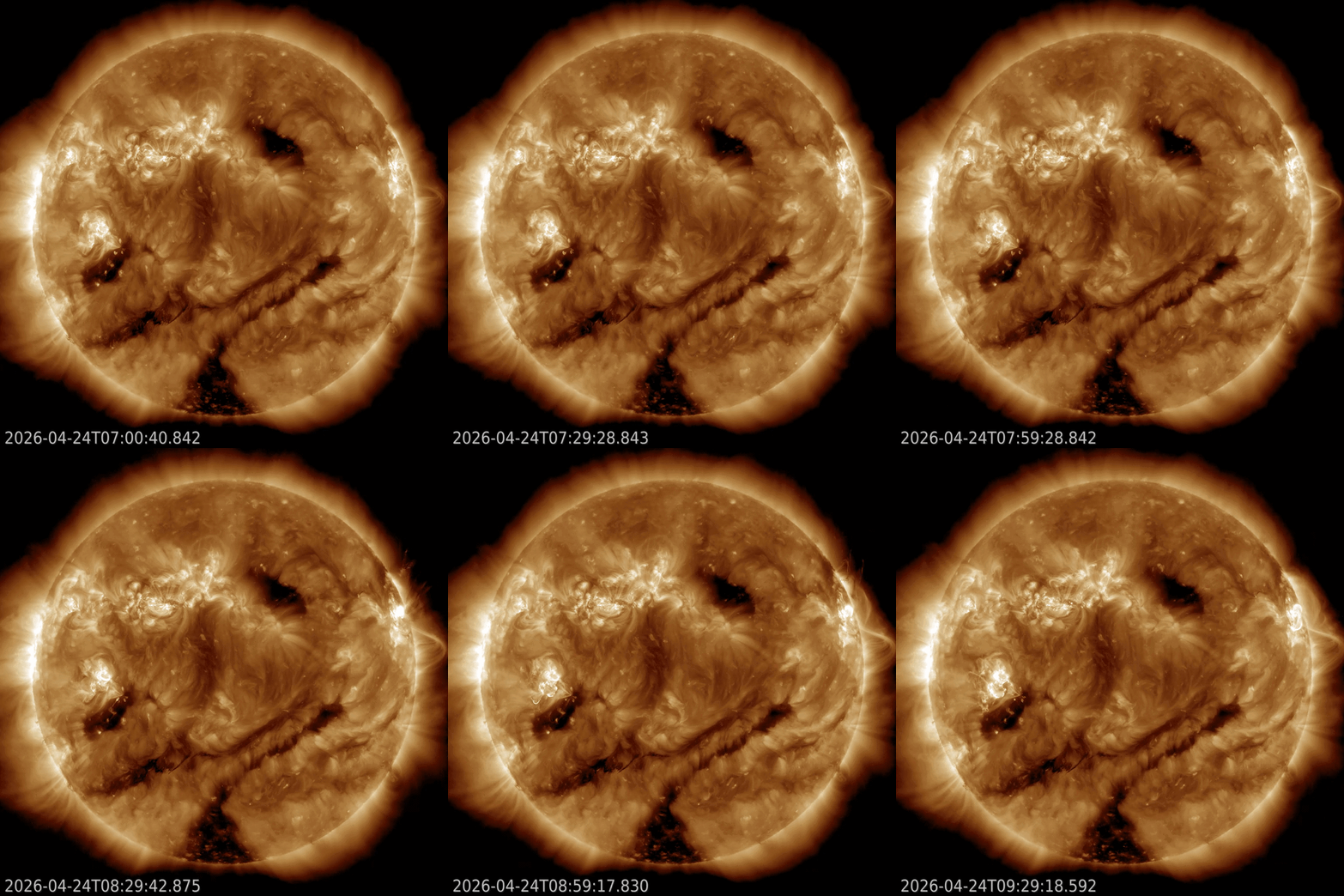
An earlier STCE newsitem reported on the two X-class flares on 24 April. As it turns out, the second one, an X2.5 flare peaking at 08:13 UTC, was observed with the H-alpha telescope of USET, the Uccle Solar Equatorial Table of the Royal Observatory of Belgium. H-alpha is a prominent, dark absorption line in the red portion of the solar spectrum at a wavelength of 656.28 nm. It occurs because the cooler gas in the solar atmosphere (the chromosphere) absorbs light coming from the hotter layers below. The chromosphere is a thin, dynamic layer located just above the Sun's visible "surface" (the photosphere, or "sphere of light") but below the Sun's hot outer atmosphere, the corona. The word "chromosphere" has a Greek origin and basically translates as "sphere of colour". It was coined in 1868 by the English astronomer Lockyer to describe the distinctive, pinkish-red glowing ring that becomes briefly visible around the edge of the Sun during a total solar eclipse, when the Moon completely occults the Sun.
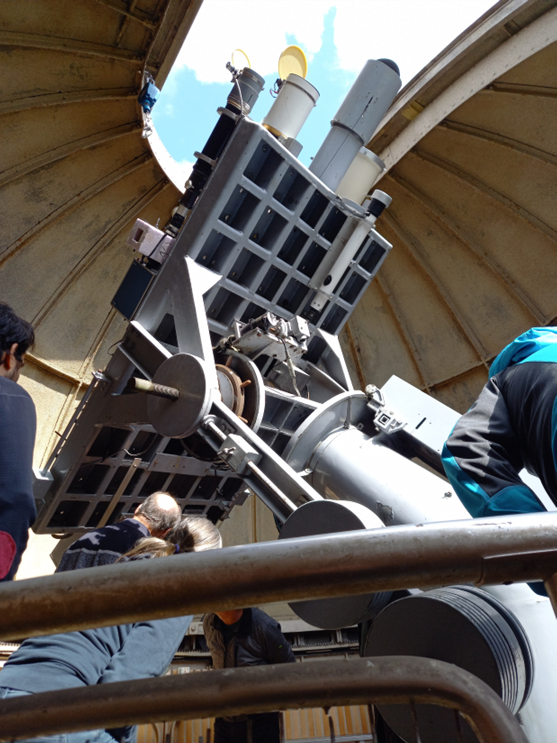
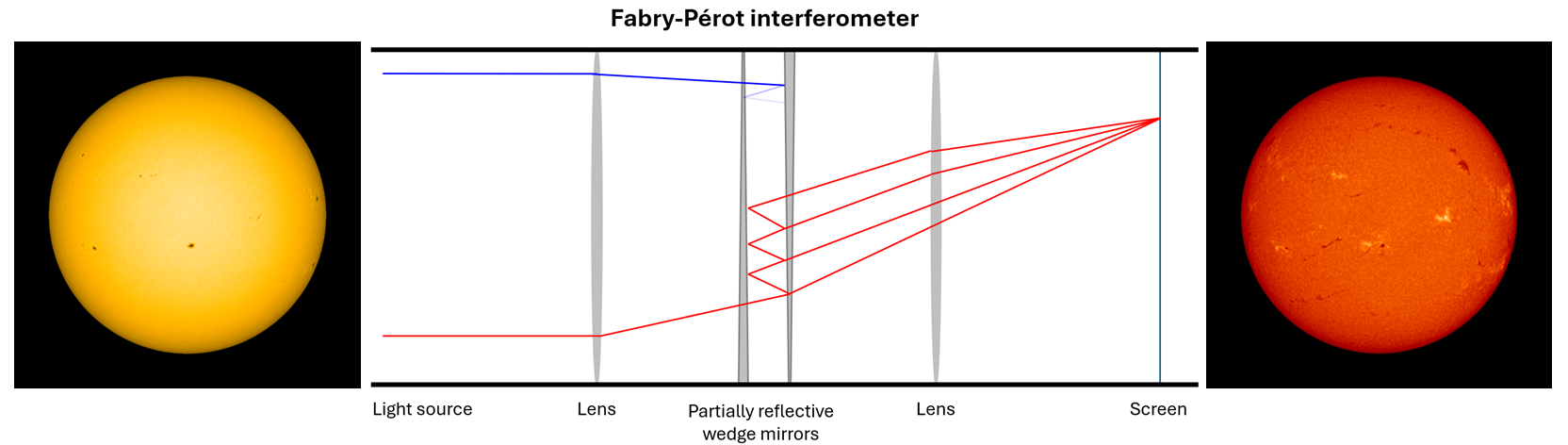
So, the chromosphere is usually not visible because it is outshone by the much brigher photosphere. As a result, special filters are required to observe the chromospheric features, such as prominences, filaments and solar flares. Indeed, the standard solar filters only reduce the total amount of light. To see the Sun in the narrow H-alpha line, astronomers use specialized "narrowband" filters (often with a bandpass of less than 0.1 nm) attached to the telescope to isolate this specific crimson glow. The USET H-alpha telescope has a diameter of 80 mm and is equipped with a Fabry-Pérot filter. This is an optical device consisting of two parallel, partially reflective mirrors separated by a tiny, specific distance - thus creating a kind of cavity. When light enters the cavity, it bounces back and forth between the mirrors. Through the process of constructive and destructive interference, only specific wavelengths of light (in this case the H-alpha line at 656.28 nm) will align perfectly to reinforce each other allowing them to pass through the filter. All other wavelengths will not get through. The USET H-alpha telescope has a bandpass of less than 0.05 nm, allowing the instrument to observe features both at the limb (prominences) and on the solar disk (filaments, solar flares). The image above shows the equatorial table with the H-alpha telescope on the left (black tube). The sketch beneath provides an idea what happens in a Fabry-Pérot etalon.
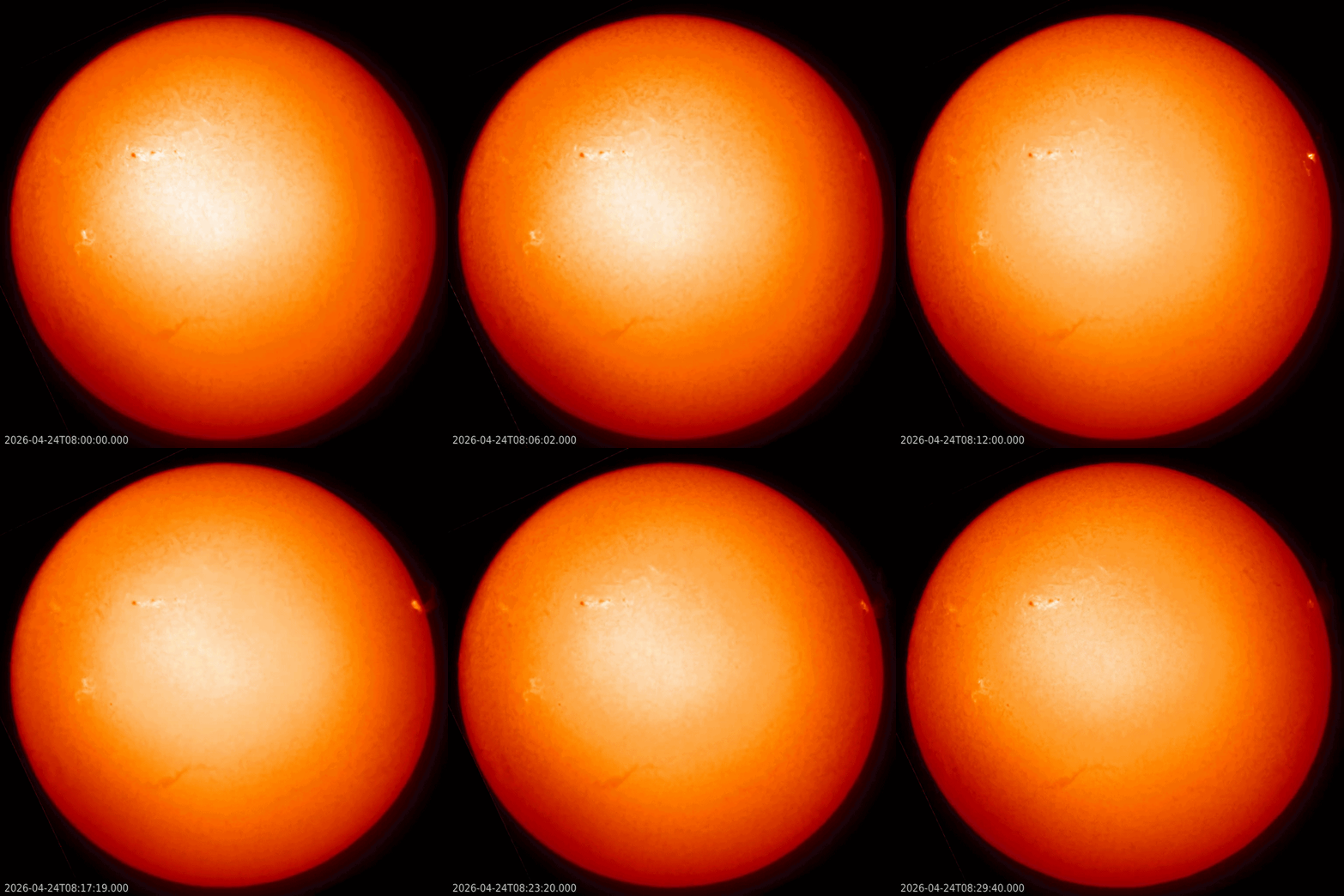
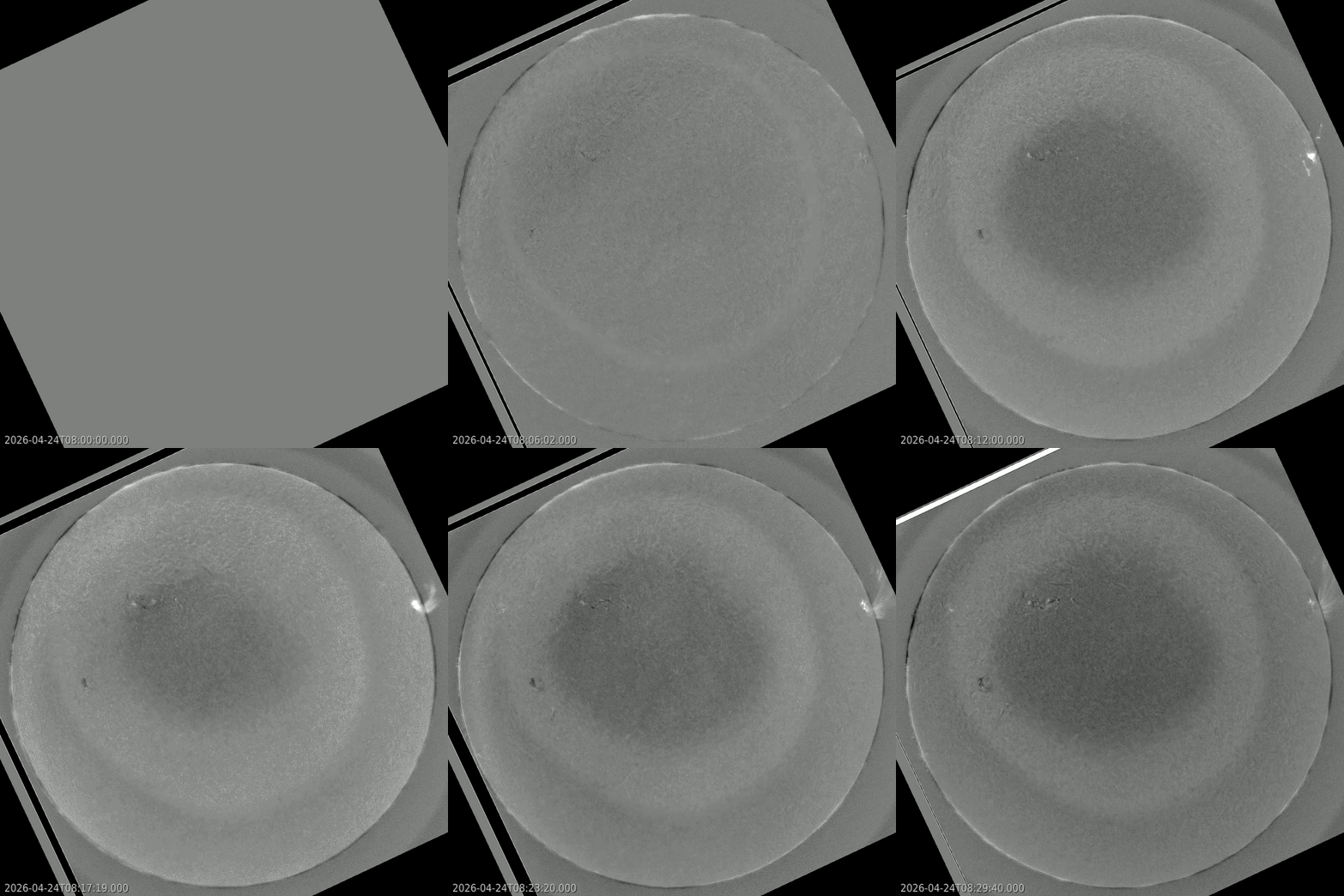
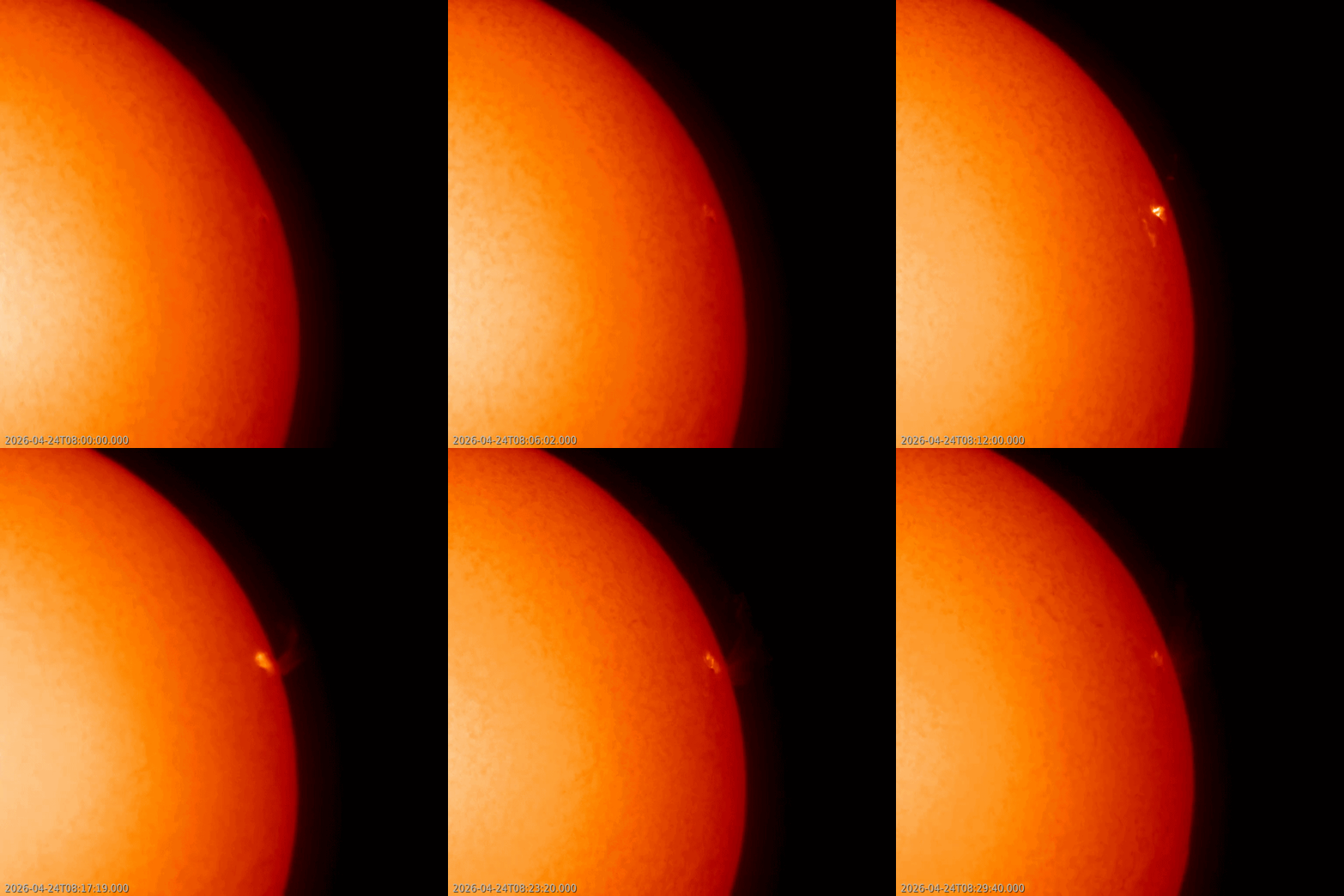
The imagery underneath shows the X2.5 flare in H-alpha as recorded by the dedicated USET telescope. The H-alpha instrument was recording in flare patrol mode, i.e. at a cadence of 4 images per second, of which only a portion has been selected (3 images per minute). Unfortunately, the seeing was particularly bad during the entire observation period (08:00 - 08:30 UTC), hence the images are not as crisp as they usually are. Nonetheless, the flare (on disk) and other eruption details (over the solar limb) are very well visible. The images to the right are difference images, where one image is subtracted from the next, to highlight more subtle details. In the difference movies, a faint wave can be seen moving to the north and east ("left") of the flare zone. This is called a Moreton wave. Moreton waves are large-scale disturbances observed in the solar chromosphere propagating with a typical speed ranging from approximately 500 to more than 1500 km/s. They can travel distances of up to one solar radius across the solar surface. These chromospheric Moreton waves correspond to the sweeping skirt of a fast shock propagating in the solar corona, thus representing the footprints of these coronal disturbances (or "coronal waves" - see this STCE newsitem). Otherwise said: the Moreton waves are the chromospheric counterpart of the coronal waves. These coronal waves correspond to the shock waves excited by coronal mass ejections (CMEs) rather than being generated directly by solar flares (Zhai et al. 2026 ; Huang et al. 2025 ; Warmuth et al. 2004). A clip of the associated coronal wave in extreme ultraviolet (SDO/AIA 193) can be found here.
 |
 |
 |
 |
This newsitem was written with the kind collaboration of Dr Sabrina Bechet (ROB/SIDC/USET and SILSO).