The STCE's SC25 Tracking page has been updated to reflect the latest evolution of some critical space weather parameters for the ongoing solar cycle 25 (SC25). It covers various aspects of space weather, from sunspot numbers over geomagnetic indices all the way to cosmic rays. The multiple graphs allow for a comparison with previous solar cycles at similar stages in their evolution.
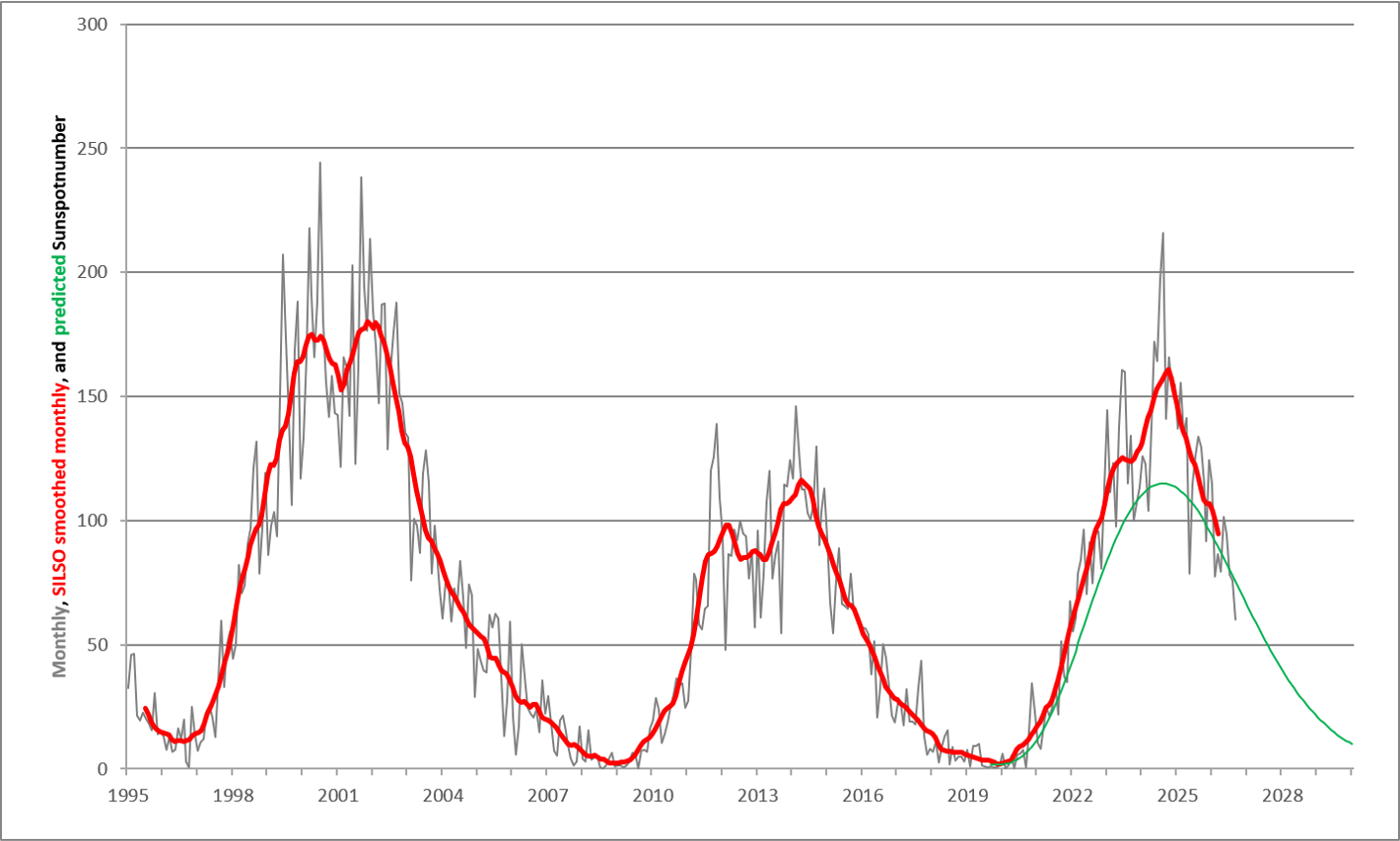
The graph below shows the monthly and SILSO smoothed monthly sunspot number (SIDC/SILSO ) from around the start of SC23 up to the current SC25. The prediction for the ongoing solar cycle 25, which started in December 2019, is displayed in green. Following the maximum of the smoothed monthly sunspot number in October 2024 (SILSO newsitem), the overall solar activity has been gradually declining. Flaring activity continued but at a lower rate than during the 2024-2025 timeframe. Of note is that the ongoing solar cycle has already more than 2000 M- and X-class flares. For comparison: the previous solar cycle totaled only 1200 such flares over its entire duration! With still 4 to 5 years to go until the next solar minimum, the 2457 M- and X-class flares from SC23 are on the target list as well!
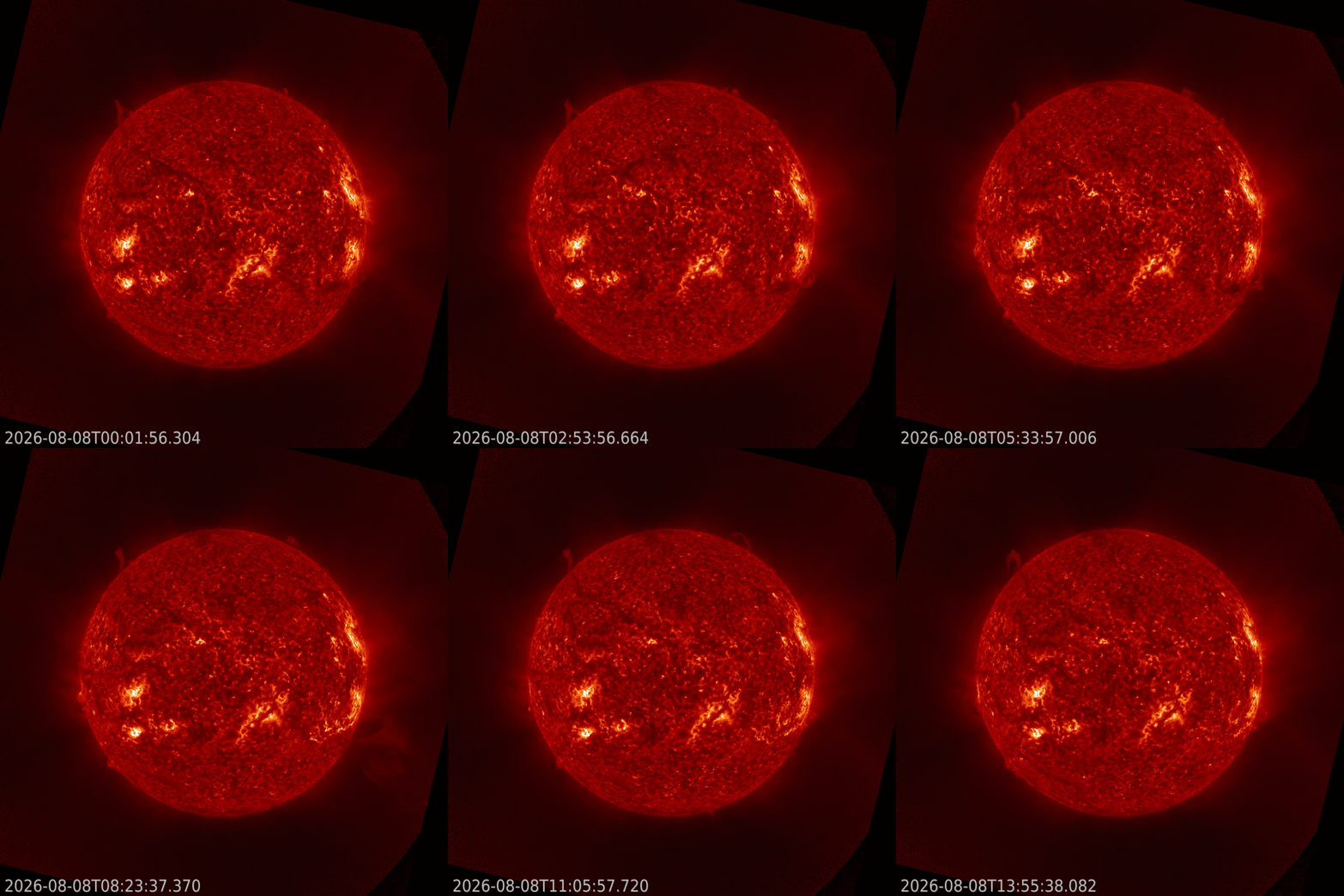
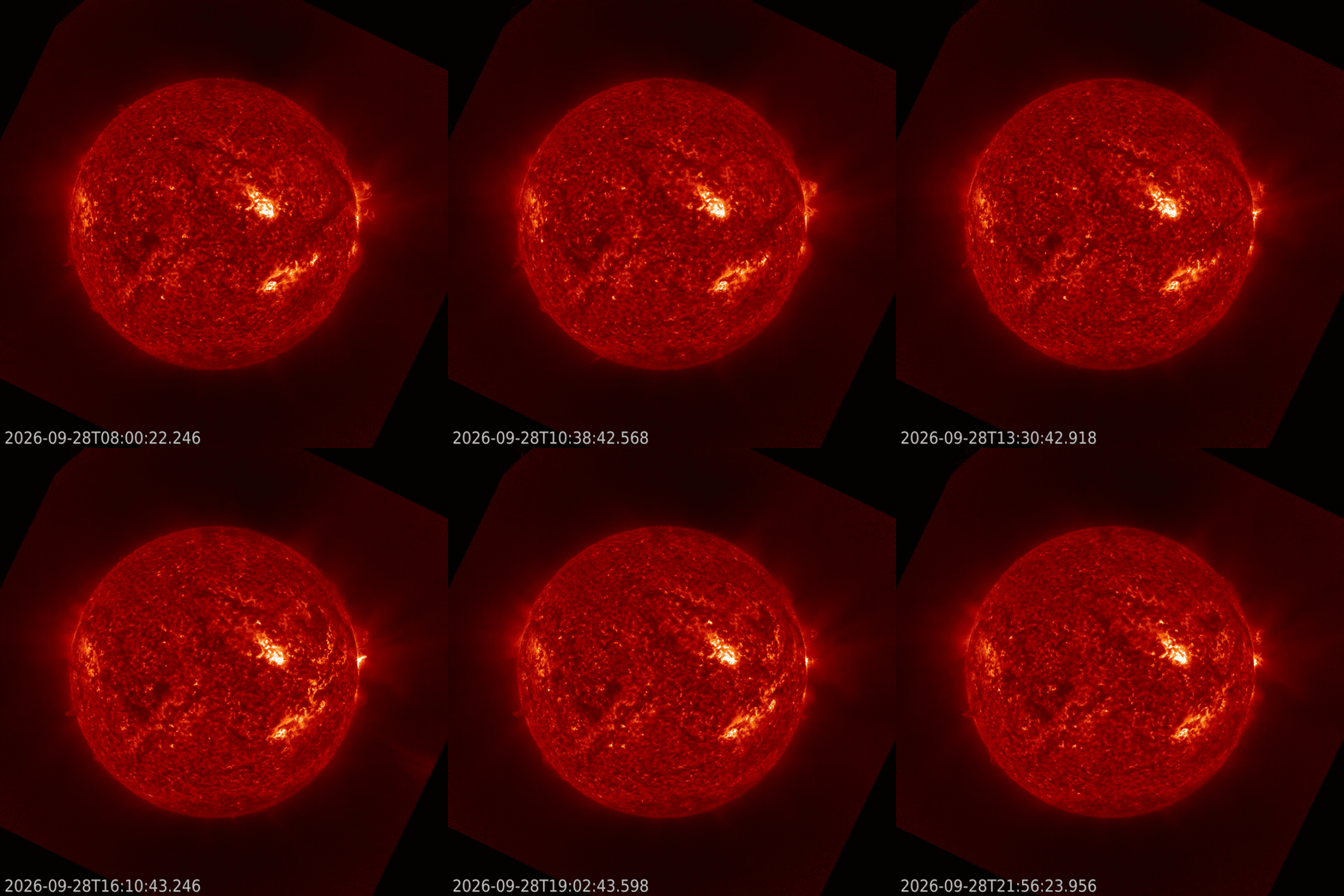
A number of the eruptions were caused by the eruption of filaments, i.e. clouds of charged particles ("plasma") above the solar surface squeezed between magnetic regions of opposite polarity. Being cooler and denser than the plasma underneath and their surroundings, they appear as dark lines when seen on the solar disc and as bright blobs when seen near the solar limb (then they are called "prominences"). Special filters are required to observe these features. The images underneath show filament eruptions on 8 August (2!) and on 28 September in extreme ultraviolet (GOES/SUVI 304 ).
 |
 |