news
Submitted on 2026-09-21
The Journal of Space Weather and Space Climate (JSWSC) has opened a Topical Issue (TI) "Space Climate: From Solar Variability to Terrestrial Impacts".
Submitted on 2026-09-11
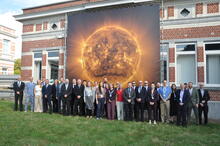
From September 7 to 10, military and civilian space weather experts gathered at the STCE to discuss key advances and challenges in military space weather. The STCE, in collaboration with the METEOWING of the Belgian Armed Forces, had the pleasure of hosting.
Submitted on 2026-09-09
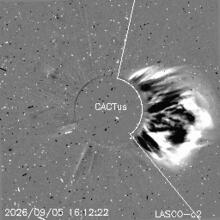
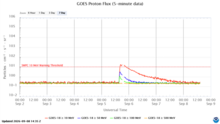
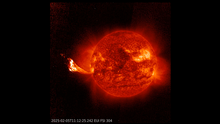
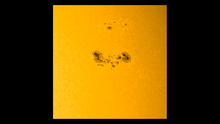
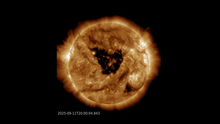
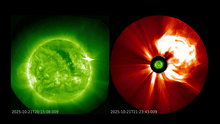
On 5 September, a spotless active region produced an M-class flare which was associated with a fast coronal mass ejection and a minor proton event. (***ADDENDUM***)
Submitted on 2026-08-31
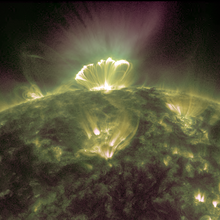
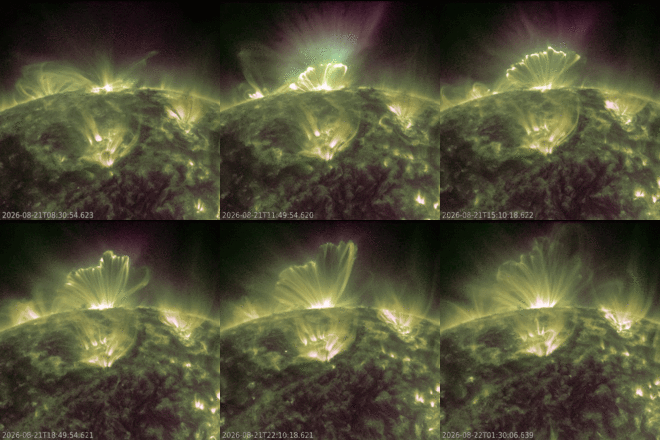
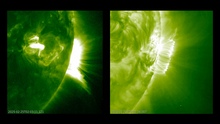
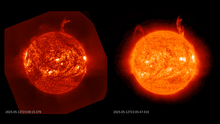
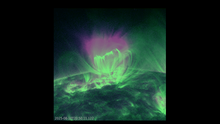
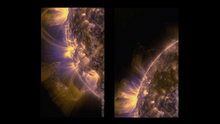
On 21 August, a moderate solar flare near the Sun's west limb was associated with impressive post-eruption coronal loops.
Submitted on 2026-08-21
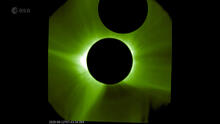
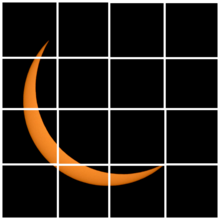
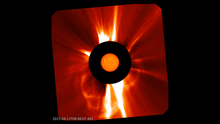
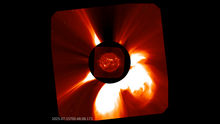
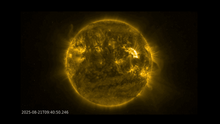
By now, you must have seen the amazing images of the total eclipse that occurred last week. However, did you know this total eclipse was also seen from space?
When a total eclipse occurs on Earth, solar imagers in space usually only observe a partial eclipse, due to a different alignment between the Sun, the Moon and the spacecraft. However, on August 12, the ASPIICS coronagraph onboard Proba-3 was in just the right place at the right time!
Submitted on 2026-08-07
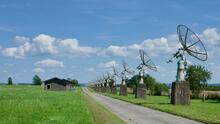
The STCE will gather at its radio astronomy station in Humain on August 12, 2026, to observe the solar eclipse.
Submitted on 2026-08-06
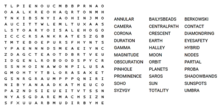
A word search game related to solar eclipses in general.
Submitted on 2026-07-30
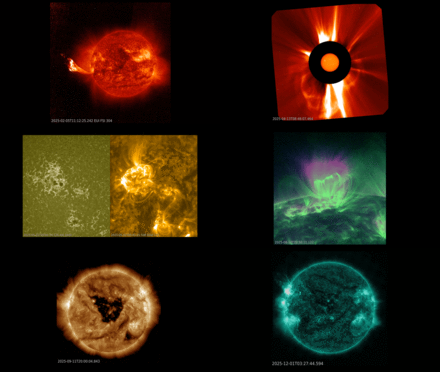
An overview and movie of some spectacular solar and space weather events in 2025 is available at the STCE's solar cycle highlights webpage. It is especially a journey into the most eye-pleasing solar activity of the year, often associating it with other impressive records and unusual circumstances.
Submitted on 2026-07-27
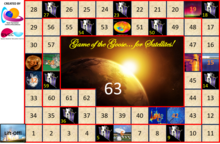
The "Game of the Goose... for Satellites!" is a special, educational version of the classic "Game of the Goose" illustrating the various space weather impacts on satellites.It integrates the effects of solar flares, solar energetic particles and geomagnetic disturbances.
Submitted on 2026-07-27
The E-SWAN Awards Committee announces its 2026 Call for Nominations for the International Space Weather and Space Climate Medals.
Pages
Zircon - This is a contributing Drupal Theme
Design by
WeebPal.






 ©2026 Royal Observatory of Belgium. All rights reserved.